Updated 26 October 2026
Conveyancing in NSW | Local property guide
The NSW Government is investigating major changes along Parramatta Road that could accommodate up to 8,000 new homes in the Inner West. For buyers, sellers and investors, the most important question is not whether every property will rise in value. It is what the planning rules permit today, what is merely proposed, and which legal and practical risks should be checked before signing a contract.
The current state-led proposal concerns sections of the Parramatta Road corridor, with a focus on the Inner West. The NSW Planning Portal still identifies it as being at the pre-exhibition stage, with a draft expected to be exhibited later in 2026. It is not an approved blanket rezoning of Stanmore, Camperdown, Petersham or other nearby suburbs.
1. What has actually been proposed?
The NSW Government announced the state-led Parramatta Road initiative on 14 September 2025. It is working with Inner West Council on potential housing, affordable housing, pedestrian and transport connections, open space, local businesses and improvements to public areas. “Up to 8,000 homes” describes a possible corridor-wide outcome, not permission to build that number of dwellings now.
Council gathered early community feedback between 25 February and 7 April 2026. Its engagement report recorded 572 survey responses. In a question about whether the corridor was a suitable location for more housing, 371 respondents said yes, 142 no and 59 were unsure. That is the opinion of people who responded to a voluntary consultation, not a representative referendum or a decision about individual properties.
2. Why Stanmore and Camperdown deserve particular attention
The engagement report identifies neighbourhood-level differences. Participants placed 59 map pins nominating locations in Stanmore as suitable for higher density and 33 in Camperdown. Other participants placed 147 pins in Stanmore and 49 in Camperdown on locations they preferred to protect from higher-density development. This is not contradictory: some respondents favoured more housing on Parramatta Road while opposing high-rise construction in adjoining residential streets.
Cardigan Street, crossing the Stanmore and Camperdown area, received 43 “avoid higher density” pins. Responses raised heritage character, potential effects on sunlight and privacy, traffic, and concerns about flooding and underground infrastructure. Margaret Street, across Petersham and Stanmore, received 22 pins raising heritage protection. These are matters raised by participants. They are not findings that every property on those streets has a particular defect, flood classification or legal restriction.
For a purchaser, the practical lesson is that a property close to a redevelopment investigation area can face very different prospects from a property on an adjoining street. The applicable planning maps, heritage schedules and site-specific constraints matter far more than a suburb-wide headline.
3. There are two different Inner West planning processes
At the same time as the Parramatta Road state-led proposal, Inner West Council is exhibiting its separate Our Fairer Future Plan 2, covering selected investigation areas including parts of Stanmore, Petersham, Leichhardt, Lewisham and neighbouring suburbs. Submissions on that council plan closed on Wednesday 28 October 2026.
A property may be near one investigation area, within another, or subject to existing planning instruments independently of either proposal. Interested owners should check the actual boundaries of both programmes. Neither a council consultation map nor a possible future state rezoning should be advertised or treated as an existing development consent.
4. Seven conveyancing checks before buying near Parramatta Road
Check 1 – Current zoning and the section 10.7 planning certificate
A NSW sale contract generally includes a current section 10.7 planning certificate. This identifies important current planning information, controls and hazards. A fuller section 10.7(5) certificate can provide additional council-held information. A buyer who is relying on future redevelopment should also obtain advice on any exhibited proposals and the applicable Local Environmental Plan and State Environmental Planning Policies. A certificate does not guarantee that a proposed rezoning will occur or that a particular development application will be approved.
Check 2 – Heritage controls and proposed works
Stanmore, Camperdown, Petersham and nearby areas contain heritage conservation areas and individual heritage items. Inner West Council publishes an address-searchable heritage map, including information for the Cardigan Street and Parramatta Road precincts. Buyers planning demolition, extensions, shopfront changes or townhouse development should have the specific property checked, not rely on the agent’s broad description of “development potential”.
Check 3 – Flood, drainage and other site constraints
A low-lying site, an overland flow path or an easement for drainage can materially affect feasible building footprints and future costs. Cardigan Street concerns in the consultation report highlight why these checks are relevant, but do not establish flood status for a particular address. Obtain available council flood information, drainage plans and specialist advice where warranted.
Check 4 – Title, easements and restrictions
Review the title search, deposited plan, registered easements and relevant dealings. An easement may constrain where foundations, driveways or additional buildings can be placed. Development-site buyers should also investigate rights of access, services, restrictive covenants and the commercial feasibility of any site amalgamation.
Check 5 – Existing approvals and neighbouring proposals
Look at relevant development application records for the property and nearby sites. A purchaser should distinguish an existing consent, a lodged proposal, a neighbourhood study and a publicly discussed concept. Neighbouring construction can affect light, privacy and amenity even if the purchaser’s own lot is unchanged.
Check 6 – Strata and mixed-use property issues
When purchasing an apartment or shop in a strata building, review strata records for maintenance, defects, special levies, insurance, common property and commercial-use issues. Greater future density nearby is not necessarily a benefit for an individual unit, especially if the development would affect outlook, sunlight, access or traffic.
Check 7 – Contract timing and auction commitments
If a buyer is considering a property on the expectation of new planning controls, obtain the relevant searches and specialist advice before exchange. Do not assume an agent’s verbal statement will become a contractual promise. NSW auction purchases generally do not carry an ordinary cooling-off period, making pre-auction checks particularly important.
5. What should existing homeowners and sellers consider?
Some owners may be approached by developers interested in assembling adjoining sites. Any offer should be assessed against independent valuation evidence, the present zoning, the uncertainty of future controls and the contract’s conditions. A joint sale may require coordination among several owners, lenders and occupiers. The first proposal is not necessarily the final or best available transaction.
Sellers and agents should describe existing planning rights accurately and identify proposed changes as proposed. Buyers should not pay a speculative “rezoning premium” without understanding how likely, costly and delayed any proposed use might be. Conversely, owners should not assume they must sell simply because a property is being investigated for future housing.
6. What about shops, workshops and commercial premises?
Parramatta Road includes commercial and mixed-use properties. The community report records interest in revitalising vacant shops, retaining local businesses and providing more street-level amenities. For a purchaser of commercial property, conveyancing due diligence should consider current permitted use, lease terms, rights of renewal, building condition, approvals, outgoings and whether redevelopment assumptions depend on vacant possession.
For businesses operating under commercial or retail leases, a possible future rezoning does not itself terminate the lease. Any redevelopment strategy requires separate examination of the lease and the applicable legal rights.
7. What happens next?
The Department of Planning, Housing and Infrastructure expects the draft Parramatta Road state-led rezoning proposal to be exhibited in late 2026, with consultation before a final decision. At that point, the proposed maps, building heights, floor-space controls, transition provisions and supporting infrastructure documents—if included—can be examined properly.
Until then, claims that a particular Stanmore or Camperdown block “will become apartments” are premature unless supported by an independently applicable, already operative planning control or approval.
How CM Lawyers can help
Whether you are purchasing a terrace near Cardigan Street, selling a property along Parramatta Road, reviewing a commercial contract or considering a potential redevelopment site, the first step is to understand the actual documents and legal obligations. CM Lawyers can review the contract, title, prescribed documents and relevant property issues, and identify where town-planning, engineering or valuation advice is needed before exchange. Contact our Marrickville conveyancing team for a contract review or purchase or sale conveyancing advice.
General information only. Planning proposals and legal requirements may change. Advice depends on the individual property, current legislation and the relevant contract.
Key resources
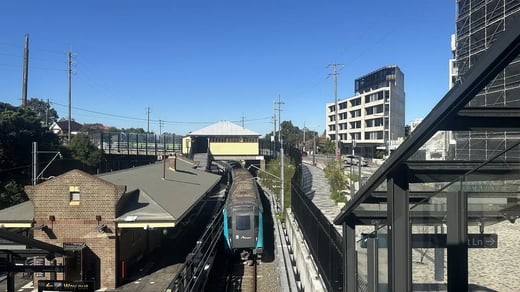
Image: Looking down Parramatta Road in Stanmore by Bidgee, CC BY-SA 3.0 AU, via Wikimedia Commons (resized).