Updated 26 October 2026
Conveyancing in NSW | Local property guide
An apartment can look beautifully renovated while its owners corporation faces expensive roof repairs, waterproofing defects or a special levy. Changes to NSW strata laws in April and October 2026 are intended to improve transparency and the management of strata schemes. But they do not replace a buyer’s responsibility to investigate the building and contract before exchanging.
For purchasers in Marrickville, Dulwich Hill, Newtown, Stanmore, Ashfield and elsewhere in the Inner West, the most useful question is not simply “What has changed in strata law?” It is “What do the changes help me find out about the apartment I am about to buy?”
1. What actually changed in October 2026?
NSW implemented strata reforms in stages. The changes that commenced on 23 October 2026 introduced new and increased penalties for certain breaches of strata requirements, clarified what strata managing agents must disclose at annual general meetings about training services and commissions, and expanded the matters that can be included in levy payment plans. These payment plans can now cover current levies and interest as well as overdue levies.
Separate reforms commenced on 1 October 2026. New and returning strata committee members generally must complete free online training within three months after their appointment. There are exemptions, including for committee members in two-lot strata schemes and some industry professionals. Two-lot schemes are also exempt from strata annual reporting.
These changes aim to improve governance; they do not warrant the condition of a particular apartment building. A buyer still needs to check whether the owners corporation is keeping proper records, maintaining common property and budgeting realistically.
2. The April changes make important strata documents more useful
From 1 April 2026, strata schemes preparing or revising their 10-year capital works plans must use the prescribed standard form. An existing plan that is not yet due for revision does not automatically have to be rewritten immediately. Buyers should ask for the current plan, assess when it was prepared and compare its projected repairs with the money actually available in the capital works fund.
For new strata developments, developers must use a standard initial maintenance schedule. For relevant new multi-storey schemes, an independent surveyor must review and certify the initial maintenance schedule and the initial levy estimates. Evidence must be supplied to the owners corporation before its first annual general meeting. These requirements are intended to improve early budgeting; they are not a guarantee against defective construction or later cost increases.
An unusually low advertised quarterly levy may therefore deserve more investigation, not less. Check whether the scheme has properly allowed for lifts, waterproofing, cladding, fire-safety systems, insurance and other major expenses.
3. Obtain the section 184 certificate — and read beyond it
A section 184 strata information certificate provides prescribed information about the lot and scheme, including levies and outstanding amounts. Since 1 April 2026, the certificate also includes information about exclusive supply networks (commonly called embedded networks), certain compliance action affecting the owners corporation, and relevant meetings.
An embedded network can affect how residents obtain or pay for electricity, gas, hot water or other services. Buyers should establish the supplier, metering arrangements, tariffs and practical ability to change providers, rather than assuming every unit has the same utility choices.
The section 184 certificate is useful, but it is not a substitute for examining underlying strata records. It may not reveal the full implications of a developing defect dispute, a recently received engineering report or a substantial expense being considered but not yet formally approved.
4. Investigate levies, special levies and the true purchase cost
Ordinary levies fund the scheme’s daily expenses and future capital works. Special levies can be required when those funds are insufficient. Before exchange, ask for the annual budget, administrative and capital works fund balances, levy history, arrears, insurance premiums, loan arrangements, and minutes discussing major repairs or future contributions.
Consider a purely hypothetical 20-lot building facing a $600,000 roof and waterproofing project. If owners were allocated equal contributions and no other funding were available, the cost would average $30,000 per lot. Actual payments depend on unit entitlements, existing funds, approved decisions and contract arrangements. The example is not an estimate for any Inner West building.
A purchaser should have the sale contract checked for the treatment of existing or newly struck levies, any adjustments at settlement and any special conditions concerning known building expenditure. Do not assume that every levy relating to pre-settlement work must automatically be paid by the vendor.
5. Check defects, repairs and the building’s decision-making history
A professional strata records inspection should examine annual general meeting and committee minutes, defect reports, engineering advice, repair quotations, correspondence, insurance claims and relevant proceedings or orders. Consider whether water ingress, cracking, balcony deterioration, fire defects or recurrent plumbing issues have been adequately investigated.
The owners corporation has duties to maintain and repair common property. NSW Fair Trading has strengthened oversight powers, but regulatory enforcement does not mean a defect will be repaired before a purchaser moves in. A separate building inspection or specialist engineer may be necessary because documents cannot establish the physical condition of every component.
For a relatively new building, ask about statutory warranties and any applicable building-bond, inspection or defect-rectification arrangements. Obtain specialist advice on time limits and the specific building rather than assuming a seller’s or developer’s assurances will protect the buyer.
6. Check by-laws, lot boundaries and parking arrangements
The contract should contain relevant strata documents, including the strata plan and by-laws. These help distinguish the lot from common property and identify restrictions affecting renovations, flooring, pets, parking, storage cages and use of shared facilities.
This is especially important in older Inner West converted terraces, small apartment blocks and duplexes, where an attic, courtyard, garage or storage area may appear to be part of the home but may not be owned as a separate lot area. A physical inspection does not establish title to that space or authority to alter it.
If the buyer wants to renovate, install air conditioning or an EV charger, check the registered by-laws, approvals and building capacity. Some further legislative reforms concerning EV charging on individual lots and the management of two-lot schemes are planned to start in 2027. They should not be described as already operating in October 2026.
7. Why these checks matter particularly in the Inner West
Marrickville, Dulwich Hill, Newtown, Stanmore and Ashfield contain a mixture of older strata buildings, converted houses, new residential developments and mixed-use buildings. Different schemes can have very different maintenance histories, boundaries, utility arrangements and future expenses. The suburb name or apartment’s age does not establish whether the scheme is well managed.
A buyer considering a newly built apartment near transport infrastructure may focus on convenience and likely rental demand. A purchaser of an older block may be attracted by lower levies or a smaller number of lots. In both situations, due diligence should consider the property’s actual documents and condition, not generalisations about newer or older buildings.
8. A practical strata checklist before exchange
- Ask your solicitor or conveyancer to review the sale contract, title, strata plan, by-laws and special conditions.
- Order a recent section 184 certificate and a professional strata records inspection.
- Check ordinary levies, financial statements, special levies, arrears and any proposed borrowing.
- Read the 10-year capital works plan, maintenance reports and recent meeting minutes.
- Investigate defects, litigation, compliance notices, insurance claims and major repair proposals.
- Check whether parking, storage, courtyards and proposed renovations match legal rights and approvals.
- Ask about embedded utility networks and whether the stated outgoings are reliable.
- Obtain building or engineering advice where the documents or inspection reveal significant physical concerns.
The reforms improve the information available and accountability of those managing strata buildings. They cannot remove the possibility of special levies, unexpected building defects or disagreements between owners. A strong decision depends on matching the contract, financial records, technical inspections and intended use of the apartment.
Before committing to a purchase or auction bid, CM Lawyers can assist with contract review and conveyancing, help identify relevant strata and title issues, and recommend specialist building or engineering investigations where required. Contact our property team early enough for the necessary checks to be completed before exchange.
General information only, current at the date shown. Planning and strata rules change; advice depends on the individual property and contract.
Key resources
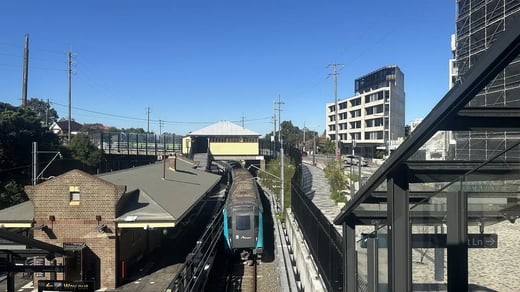
Image: Tempe House and apartments by Gareth Edwards, CC BY-SA 3.0, via Wikimedia Commons (cropped).