
Updated 4 November 2026
Giving money or property to an adult child can help them now, but it also changes your own finances and estate plan. Before transferring anything, decide whether it is a gift, loan or another arrangement, document its effect on future inheritance, and protect your housing and care needs. Clear records reduce uncertainty without guaranteeing a dispute-free estate.
What is an early inheritance?
An early inheritance usually describes financial assistance provided during a parent’s lifetime. The phrase does not create a special legal arrangement or determine whether repayment is required. It might refer to a cash gift, property transfer, loan or contribution towards housing. Each has different consequences for ownership, taxation and the eventual estate.
A completed gift generally leaves the parent’s ownership, while an enforceable loan may remain an asset owed to them and later their estate. A will ordinarily deals with assets held at death. Calling a payment an “advance” does not explain how those arrangements fit together.
Should the assistance be a gift or a loan?
Choose the arrangement that reflects your actual intentions. A genuine gift ordinarily does not require repayment. A loan creates a repayment obligation that should be clearly agreed and evidenced. Consider whether you can afford to give the money away permanently and whether the child could realistically repay it if required.
Legal Aid NSW explains gifts and private loans. Record the arrangement before transferring funds. Avoid telling a bank that money is an unconditional gift while privately treating it as repayable. Inconsistent documents can undermine the arrangement and create problems for everyone involved.
What should a family loan agreement cover?
A properly prepared agreement should identify the parties, amount, repayment dates or triggers, interest if applicable, and consequences of default. It should also address death, incapacity and any agreed security. Obtain advice about enforceability and lender consent where property is involved, rather than assuming a signed family note resolves every issue.
Keep bank records and evidence of repayments. A loan does not automatically create a mortgage or a right to lodge a caveat. Ask about appropriate security and limitation periods, and ensure the will states whether an outstanding loan is to be collected, forgiven or brought into account.
Will an early gift automatically reduce a later inheritance?
Do not assume it will. If you want a lifetime gift counted towards a beneficiary’s eventual share, arrange suitable will provisions and supporting records. Specify which gifts count, how they are valued and what happens if the estate is too small to equalise benefits. General statements about fairness may leave substantial uncertainty.
Discuss whether to use the original amount or another valuation method, how later gifts affect the calculation, and what happens if the child dies first. Our Make a Will page explains the preparation process. Review the transfer documents and will together so their instructions are consistent.
What happens if the parent dies without a valid will?
NSW intestacy rules determine who receives the estate when there is no effective will covering it. Under section 140 of the Succession Act, lifetime gifts do not alter that statutory distribution. A child’s earlier assistance is therefore not automatically deducted simply because siblings consider that result fairer or expected equal treatment.
Section 140 also addresses gifts under a will where there is partial intestacy. This does not turn an outstanding enforceable loan into a gift or prevent a separate family provision claim. Making a valid will allows you to record intended adjustments rather than relying on assumptions.
Can a child still make a family provision claim?
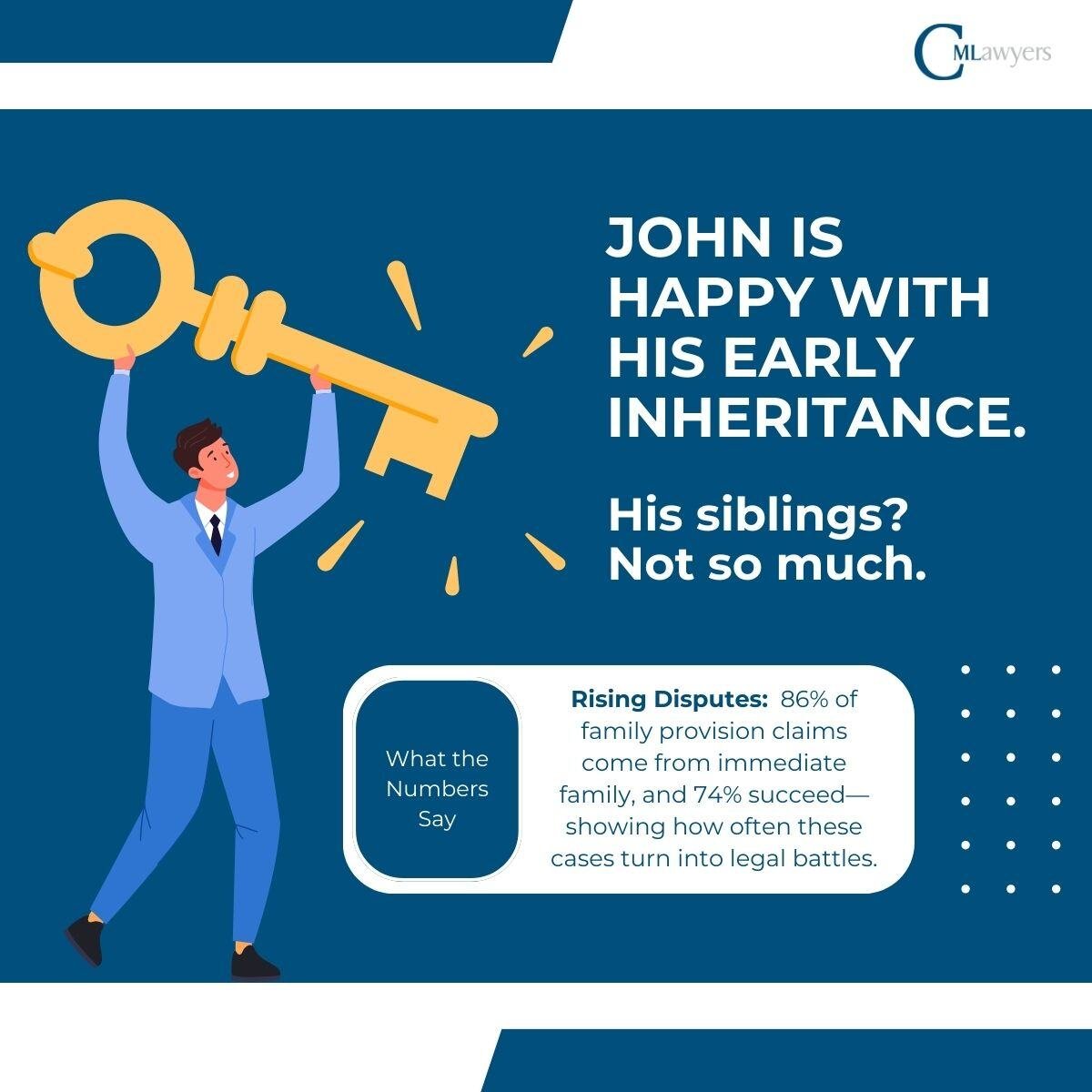
Yes, receiving an early gift does not automatically prevent an eligible child from seeking further provision. The Court considers whether adequate provision has been made for proper maintenance, education or advancement in life. Earlier support, financial circumstances, competing claims and the estate’s resources can all matter. Eligibility alone does not guarantee an award.
Family provision applications generally must be filed within twelve months after death; late applications require the Court’s permission on sufficient cause being shown. A signed “full and final inheritance” acknowledgement alone does not extinguish these rights: section 95 requires court approval of a release. Obtain advice before relying on a family agreement as protection.
Can property given away become notional estate?
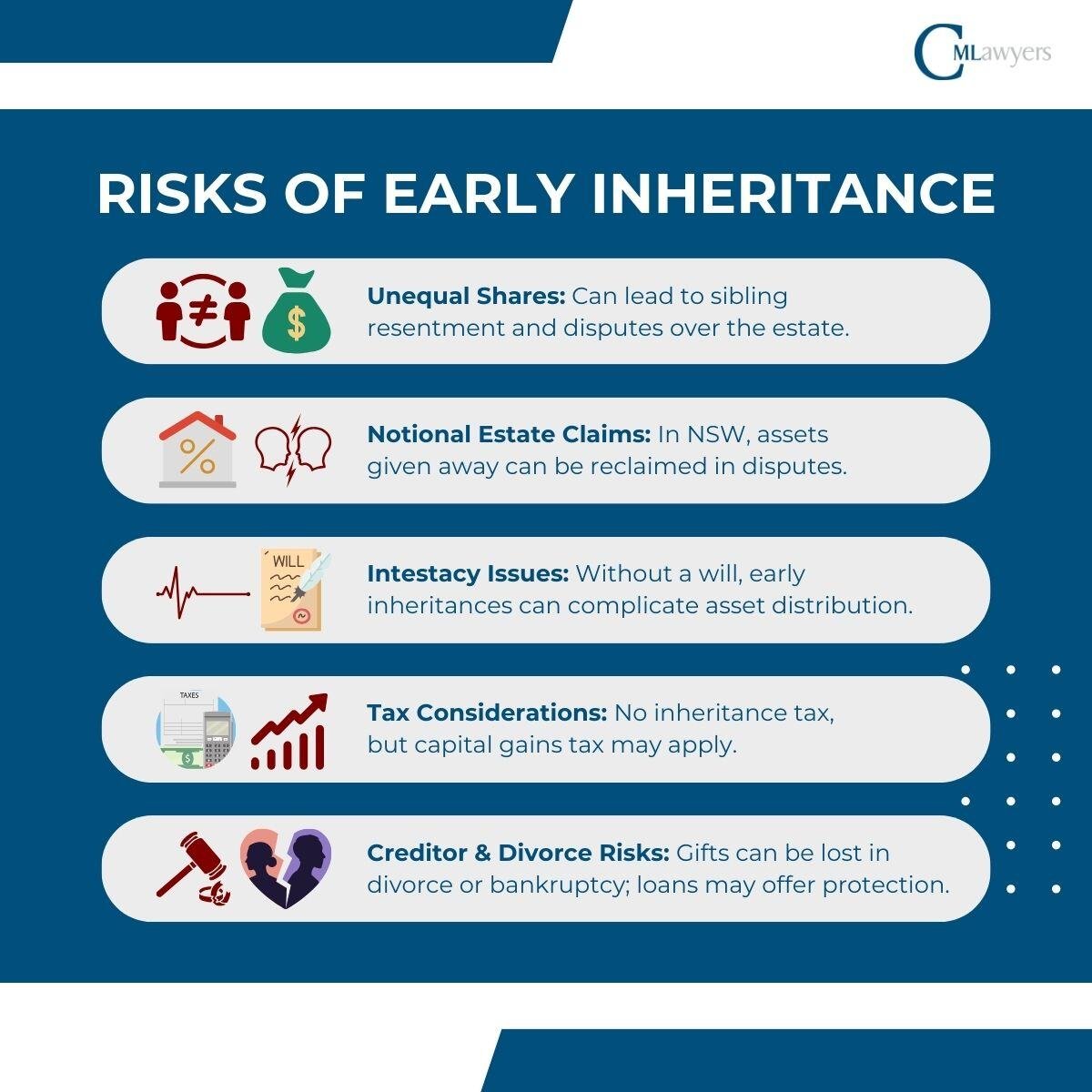
Sometimes. NSW’s notional estate rules can allow certain property outside the estate to be designated for a family provision order, but only when statutory requirements are met. They are not a general power to reverse any gift that a sibling dislikes. The transaction, its timing and the estate’s circumstances need careful examination.
Under section 80, relevant categories include transactions taking effect within three years with an intention to deny or limit provision, within one year where, when the transaction was entered into, the deceased’s moral obligation to provide adequately for an eligible person was substantially greater than their moral obligation to make the transfer, or on or after death. Further conditions apply. Neither “all gifts within three years are recovered” nor “every older arrangement is safe” accurately describes the law.
What does Sgro v Thompson show about early inheritance?
In Sgro v Thompson [2017] NSWCA 326, parents gave their daughter Rosa an unencumbered Merrylands property in 1985. The family understood this was her early inheritance and that their other daughter, Carmela, would receive the Greystanes property after the last parent died. Rosa later sought further provision from her mother’s estate.
The mother’s will left Greystanes to Carmela. The trial judge awarded Rosa 40% of the net sale proceeds, but the Court of Appeal overturned that award and dismissed her claim on 15 December 2017. It considered the earlier gift, shared understanding and competing claims. Financial need mattered but did not determine the result. The decision does not make early inheritance an automatic bar to a later claim.
What taxes can arise when giving property to a child?
An early inheritance is not automatically tax-free simply because Australia has no inheritance tax. Giving away property can trigger capital gains tax for the donor and transfer duty for the recipient. The result depends on the asset, its history and available exemptions, so obtain advice before signing or transferring ownership.
The ATO’s property guidance explains market-value treatment of family transfers. NSW transfer duty generally uses the higher of consideration and unencumbered market value. A nominal sale price does not automatically reduce tax. Ask your tax adviser to assess exemptions, valuation evidence and the cash needed to meet liabilities.
Could gifting affect the parent’s Age Pension?
Yes. Services Australia’s gifting free areas are $10,000 in one financial year and $30,000 over five financial years, with no more than $10,000 within any single year. These limits are the same for a single person or a couple. They concern benefit assessment, rather than prohibiting a person from giving more.
Under the gifting rules, excess amounts generally remain assessable assets and attract income-test deeming for five years from the gift date. A loan can also remain assessable. Check the proposed arrangement before transferring funds, particularly if you may need pension support or aged care.
Will a loan or trust protect the money from divorce or creditors?
Neither structure provides automatic protection. A recipient’s gift can be relevant to a later family property settlement or bankruptcy. Genuine loans and trusts require assessment of their terms, ownership, control and applicable law. Simply relabelling a gift as a loan after separation or financial trouble starts may not achieve the intended result.
Government guidance explains property after separation and money received during bankruptcy. Obtain coordinated advice before selecting a structure. A testamentary trust takes effect through a will after death; it does not retrospectively protect an outright gift already made during the parent’s lifetime.
How can parents protect their housing and future care?
Start with the parent’s own financial security. Allow for living costs, medical needs, housing and possible aged care before deciding what is affordable. If money or property is exchanged for accommodation or care, document the promised rights and what happens if relationships deteriorate, the property is sold or someone dies.
Legal Aid NSW’s guidance on moving in with family addresses these arrangements. Get independent advice about occupation, expenses and exit options. The parent should have a private opportunity to give instructions. Pressure to transfer assets or sign documents can be financial abuse, even when framed as helping the family.
Can an attorney distribute an early inheritance for a parent?
Appointment under a power of attorney does not itself authorise giving away the parent’s assets as an early inheritance. The attorney must act within their powers and obligations, including restrictions on gifts and benefits to themselves or others. Check the document and obtain advice before any transfer, particularly where the attorney benefits.
The Legal Aid NSW attorney guidance explains these responsibilities. The parent’s assets remain theirs while alive, even if a child expects to inherit later. Where capacity is uncertain, seek advice about the particular transaction and appropriate assessment rather than treating family agreement as sufficient authority.
What should you prepare before giving an early inheritance?
Our practical recommendation is to prepare one record of the proposed assistance, previous gifts, outstanding loans and intended treatment under the will. Check affordability, tax and pension consequences before proceeding. Discuss expectations where appropriate and safe, while preserving the parent’s independent choice. Revisit the plan when finances or family circumstances change.
Bring your current will, asset details and transfer or loan documents to your appointment. Visit our Make a Will page or contact Christine Manolakos and CM Lawyers on (02) 9557 9000 or lawyers@cmlaw.com.au for advice on coordinating lifetime assistance with your estate plan.
This article provides general information about NSW law and does not replace legal, tax or financial advice about a proposed gift, loan or estate plan.
Key resources
Legal Aid NSW — Gifts and private loans and helping family financially.
Succession Act 2006 — Family provision, notional estate, releases and intestacy.
Legal Aid NSW — Family provision claims — Eligibility, timing and relevant factors.
Sgro v Thompson [2017] NSWCA 326 — Verified NSW Court of Appeal decision.
ATO — Property and capital gains tax and deceased estates; Revenue NSW — Duty.
Services Australia — Gifting free areas — Pension assessment consequences.
CM Lawyers — Make a Will — Preparing or updating an estate plan.
CM Lawyers — Wills and estates — preparing and updating wills and estate plans.